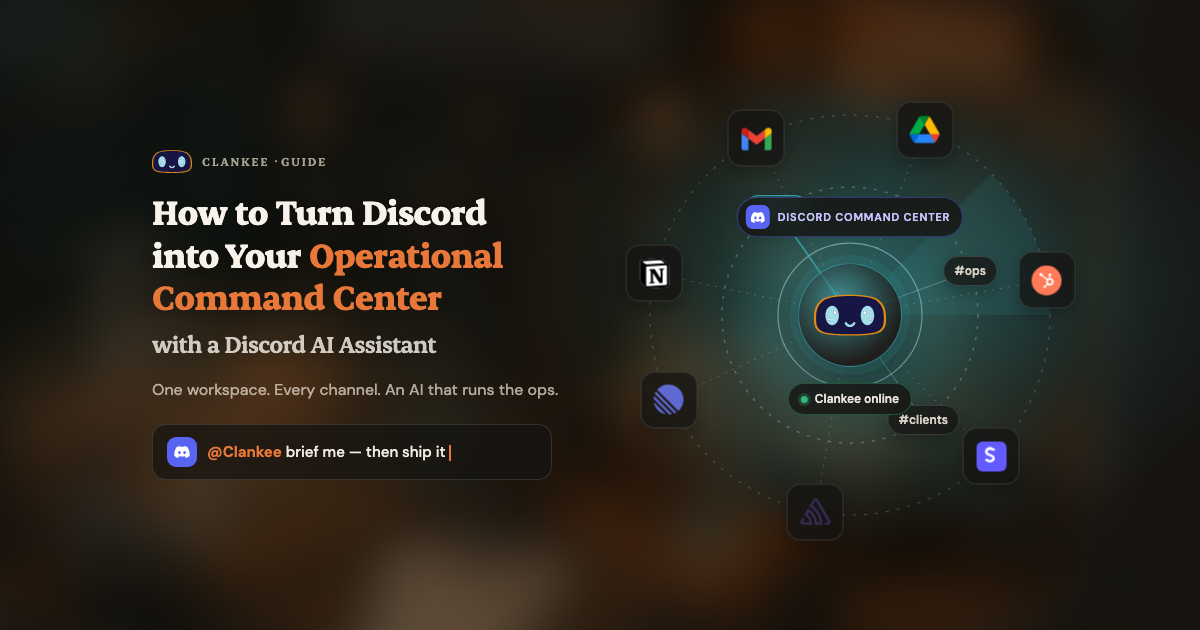
 Slack or
  Discord to manage your tools, track your data, and run your business through simple conversation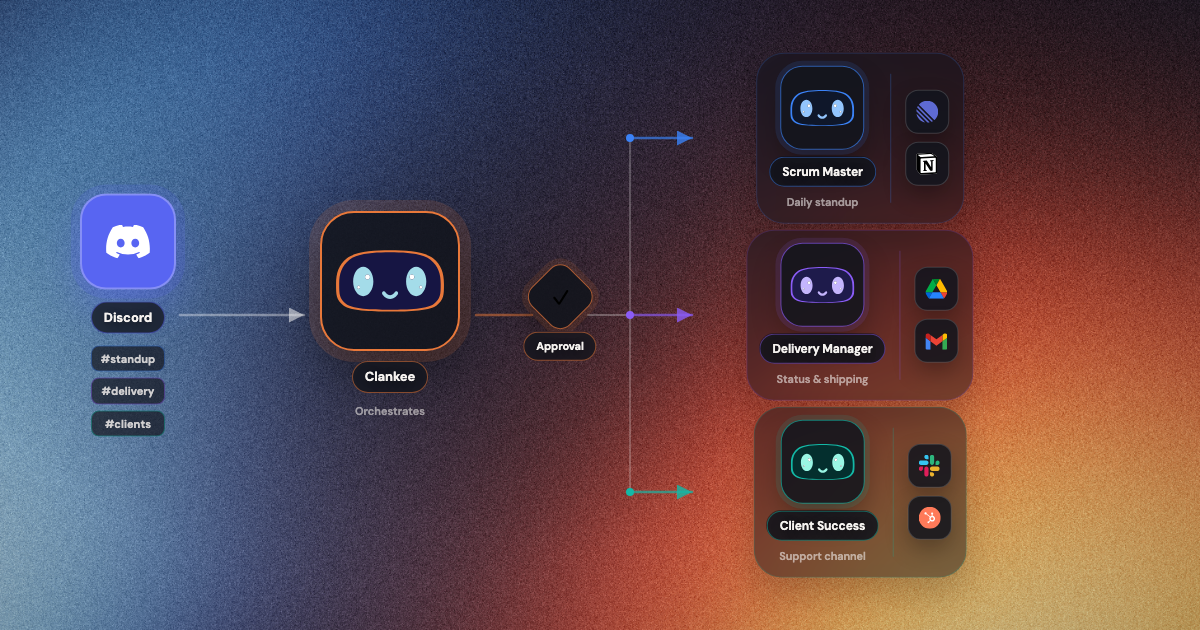
AI Employees: What They Are, Where They Fit, and How Teams Can Use Them Well
AI employees are emerging as digital workers that can handle repeatable, goal-oriented business tasks. This article explains what they are, where they add the most value, where they fall short, and how companies can introduce them responsibly.
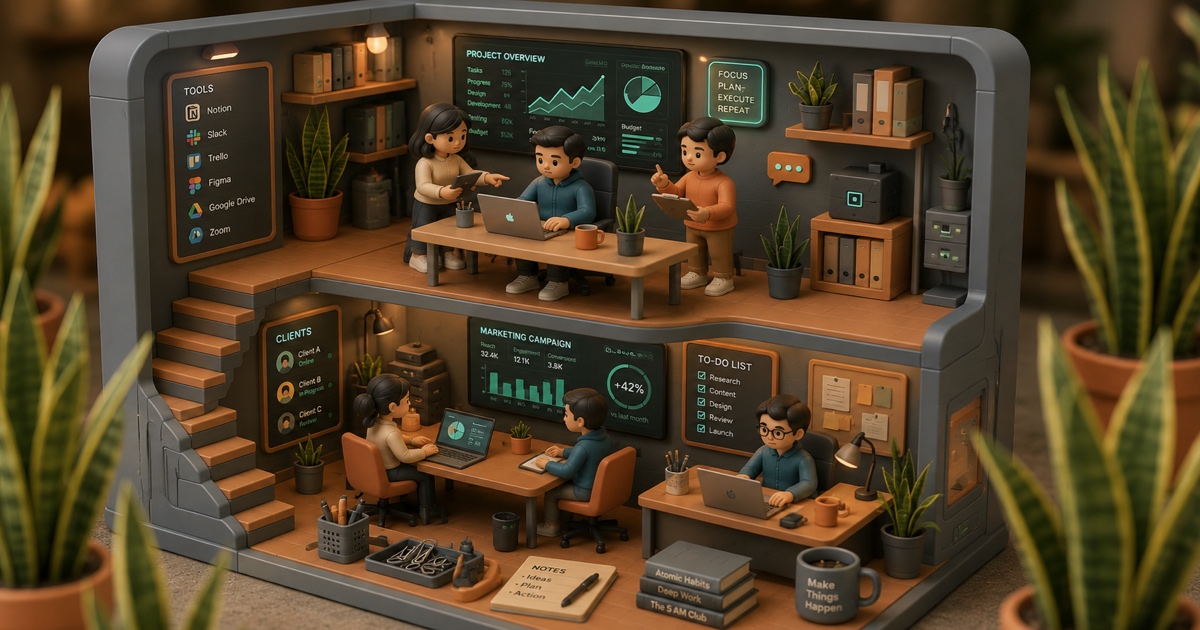
The phrase "AI employees" is showing up everywhere in business conversations.
Some people use it to describe AI tools that can answer emails, summarize meetings, create reports, qualify leads, or help run support operations. Others imagine something much bigger: software agents that act like digital coworkers, taking on real business responsibilities with minimal supervision.
The idea is exciting, but it also creates confusion.
Are AI employees really employees? Can they replace human staff? What kinds of work are they actually good at? And what does a healthy team look like when humans and AI work side by side?
The short answer is this: AI employees are best understood as AI systems that can perform repeatable, goal-oriented work inside a business process. They are not people, and they should not be treated like people. But they can become highly valuable contributors when organizations use them with clear boundaries, strong oversight, and realistic expectations.
What are AI employees?
An AI employee is usually a combination of technologies rather than a single tool.
It may include:
- a large language model for writing, analysis, or conversation
- workflow automation software
- access to company knowledge bases or documents
- integrations with tools like CRM systems, help desks, project managers, or email platforms
- rules, permissions, and approval steps
In practice, an AI employee might do things like:
- draft customer support replies
- summarize sales calls
- extract information from contracts
- generate first-pass market research
- monitor inboxes for common requests
- route tasks to the right team members
- create weekly status updates from project data
That means most AI employees are less like a magical robot coworker and more like a digital worker built for a specific lane of work.
Why businesses are interested
The interest in AI employees is not hard to understand. Most organizations have a surprising amount of repetitive knowledge work.
Teams spend hours each week on tasks such as:
- rewriting the same types of emails
- looking up information across scattered systems
- formatting reports
- updating records manually
- answering basic internal questions
- turning raw notes into polished summaries
These tasks matter, but they are often time-consuming and mentally draining. AI can help reduce that burden.
The main benefits
1. Faster execution
AI systems can process requests in seconds that might take a person 15 to 30 minutes.
2. Lower operational friction
When routine work is automated, employees can focus more on decision-making, creativity, and relationship-building.
3. Better consistency
AI can follow the same structure every time for tasks like summaries, categorization, and data extraction.
4. Scalable support
An AI assistant can help a team handle larger volumes of requests without growing headcount at the same rate.
5. Around-the-clock availability
For global teams, an AI system can keep work moving outside standard business hours.
Where AI employees work best
AI employees are most effective in environments where work is:
- repetitive
- process-driven
- text-heavy
- rules-based
- high-volume
- easy to verify
That makes them especially useful in roles adjacent to operations, administration, and first-pass analysis.
Common use cases
Customer support
AI can answer common questions, draft responses, classify tickets, and suggest next actions for human agents.
Sales operations
AI can research accounts, summarize calls, update CRM notes, and create follow-up drafts.
Marketing
AI can generate campaign outlines, repurpose content, draft social posts, and analyze competitor messaging.
HR and internal operations
AI can answer policy questions, onboard employees with guided information, and help prepare internal documentation.
Finance and legal support
AI can extract data from documents, flag missing fields, and prepare first-pass summaries for review.
In each case, the most successful implementations usually pair AI speed with human judgment.
Where AI employees struggle
The hype around AI employees can lead companies to expect too much.
AI is powerful, but it still has serious limitations.
Key weaknesses
1. Poor judgment in ambiguous situations
AI can sound confident even when context is incomplete or unclear.
2. Hallucinations and factual errors
If an AI system generates information that is incorrect, teams can make bad decisions quickly.
3. Weak accountability
A human employee can own outcomes, apply ethics, and understand consequences. AI cannot.
4. Limited business context
Unless connected carefully to internal systems and rules, AI often lacks the situational awareness needed for nuanced work.
5. Security and privacy risks
Giving AI broad access to sensitive company or customer data without guardrails can create major compliance issues.
This is why AI employees should not be deployed as unsupervised decision-makers in high-risk areas.
AI employees are not replacements for human teams
One of the biggest mistakes businesses make is framing AI entirely as a replacement story.
In reality, the better question is usually:
Which parts of a role should be automated, accelerated, or augmented?
A recruiter, support lead, account manager, or operations analyst does much more than produce text or move data between systems. Human roles involve trust, negotiation, emotional intelligence, ethical reasoning, prioritization, and accountability.
AI can assist with the work around those responsibilities, but it does not truly replace the human core of them.
A useful way to think about it is this:
- Humans set goals, make judgment calls, build relationships, and own outcomes.
- AI handles structured tasks, pattern recognition, drafting, summarization, and workflow support.
The strongest teams use AI to remove busywork, not to remove thinking.
How to introduce AI employees successfully
If a company wants real value from AI employees, implementation matters more than excitement.
1. Start with a narrow use case
Do not begin with “let’s automate everything.” Start with one recurring workflow, such as support triage or meeting summaries.
2. Define success clearly
Choose measurable outcomes like reduced response time, improved documentation speed, or fewer manual handoffs.
3. Keep humans in the loop
Require review for external communications, sensitive decisions, and exceptions.
4. Build strong permissions
AI should only access the data and systems it truly needs.
5. Document rules and escalation paths
The AI system needs boundaries. When confidence is low or requests fall outside scope, it should hand off to a person.
6. Train the team, not just the tool
Employees need to know how to use AI effectively, spot errors, and work with new workflows.
7. Review performance regularly
AI systems drift, business rules change, and quality can slip. Ongoing monitoring is essential.
A simple example
Imagine a mid-sized software company with a customer support team.
Before AI, agents spend the first two hours of each day:
- sorting incoming tickets
- identifying duplicate issues
- finding help center articles
- drafting basic replies for password resets, billing questions, and feature access requests
After adding an AI employee for support intake, the system:
- reads each new ticket
- classifies issue type and urgency
- suggests a reply using approved templates
- links relevant help articles
- flags unusual or emotional cases for human review
The support agents still handle customers, solve edge cases, and manage sensitive interactions. But now they spend far less time on repetitive triage. Response times improve, and the team has more capacity for high-value work.
That is a realistic and useful version of an AI employee.
The future of AI employees
Over time, AI employees will likely become more capable, more connected to business systems, and more autonomous within carefully defined tasks.
We will probably see more organizations creating digital workers for specialized functions such as:
- revenue operations
- procurement support
- internal IT help desks
- compliance documentation
- project coordination
- knowledge management
But as these systems become more common, companies will also need stronger governance.
Questions around transparency, auditability, bias, security, and responsibility will become even more important. Businesses that treat AI as a serious operational capability rather than a novelty will be in a better position to benefit from it.
Final thoughts
AI employees are not science fiction anymore, but they are also not magical replacements for human talent.
At their best, they are practical digital teammates designed to take on repetitive, structured work inside a defined process. They can help companies move faster, reduce manual effort, and scale operations more efficiently.
The real opportunity is not to ask whether AI can do a person’s job from start to finish. It is to ask how AI can support people so they can do their jobs better.
That mindset leads to smarter adoption, better results, and healthier teams.
In the years ahead, the organizations that win with AI employees will not be the ones that automate the most. They will be the ones that combine automation with judgment, speed with oversight, and technology with trust.