 Slack or
  Discord to manage your tools, track your data, and run your business through simple conversation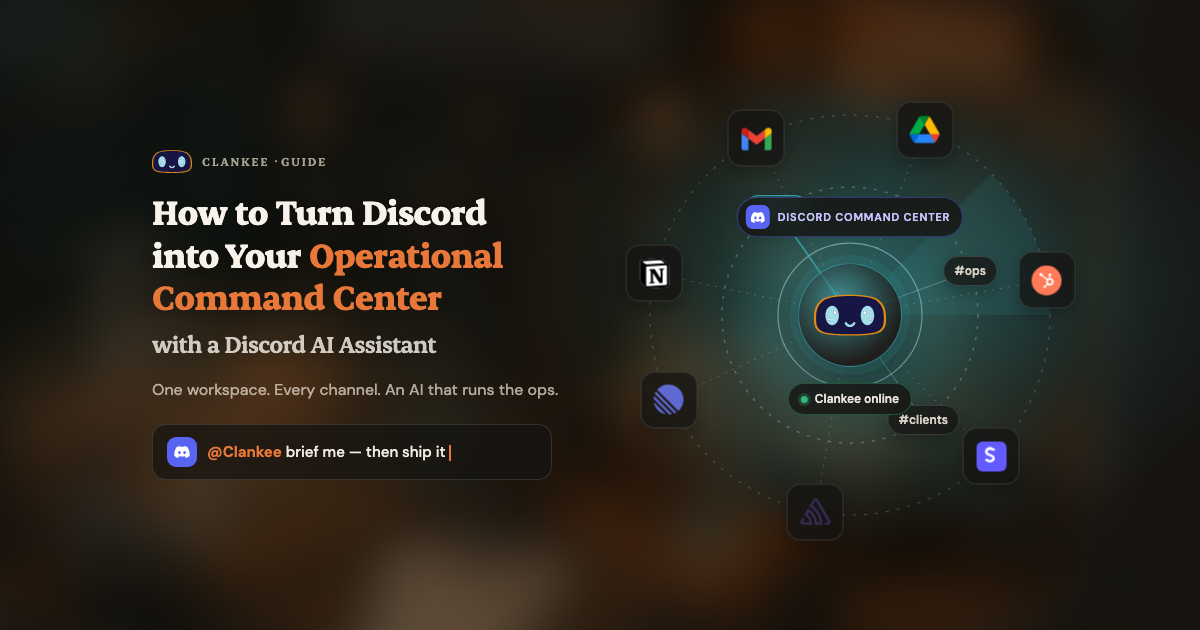
How AI Agents Actually Help Run a Business (And Where Humans Stay in Charge)
Skills, scoped integrations, and approval gates: how AI agents like Clankee handle real business work without taking decisions out of human hands.
Every founder who has tried an AI tool for their business has run into the same wall: the assistant either does too little to matter or tries to do too much and breaks something you actually cared about. Neither outcome builds trust, and trust is the entire point of handing work to a machine.
The businesses getting real value from AI agents right now treat them as operators, not owners. The agent runs the standup prep, drafts the changelog, flags the marketing idea buried in a Discord thread. A human still decides what ships. This article breaks down how that division of labor actually works in practice, using Clankee, an AI team assistant built by Otimbi Labs, as the working example throughout.
The Right Mental Model: Assistant, Not Replacement
Before looking at specific capabilities, it helps to set the boundary clearly. An AI agent embedded in your business should:
- Handle repetitive, well-defined tasks that eat time without needing judgment calls
- Surface information and options for a human to act on
- Execute approved actions inside the tools your team already uses
- Learn from what it's asked to do repeatedly and get faster at it
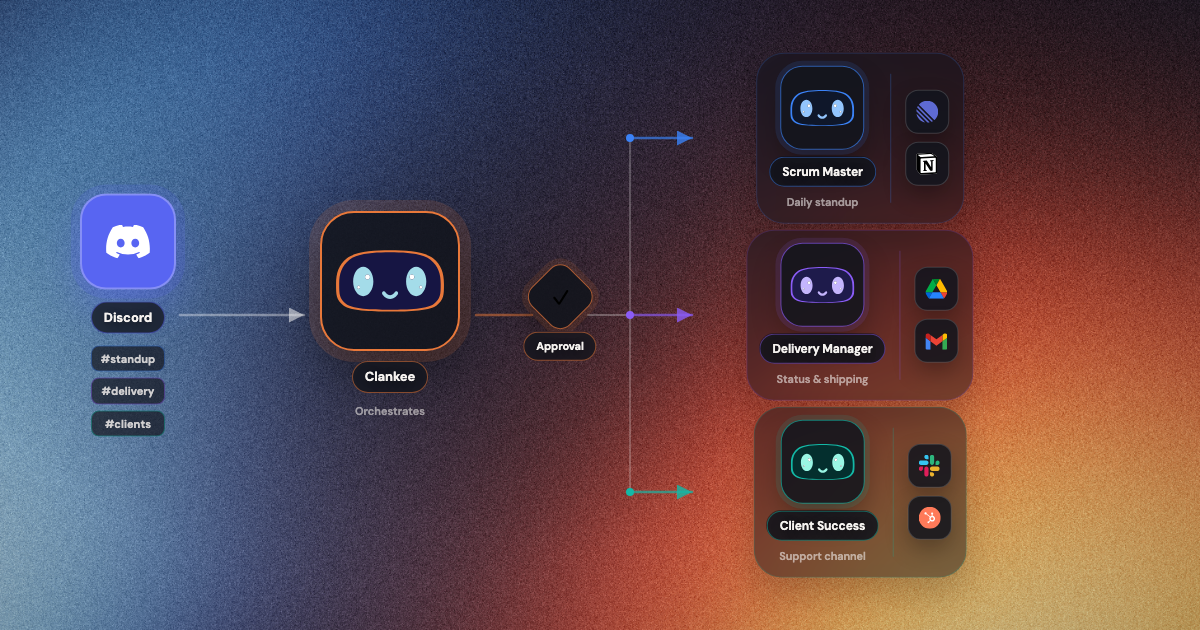
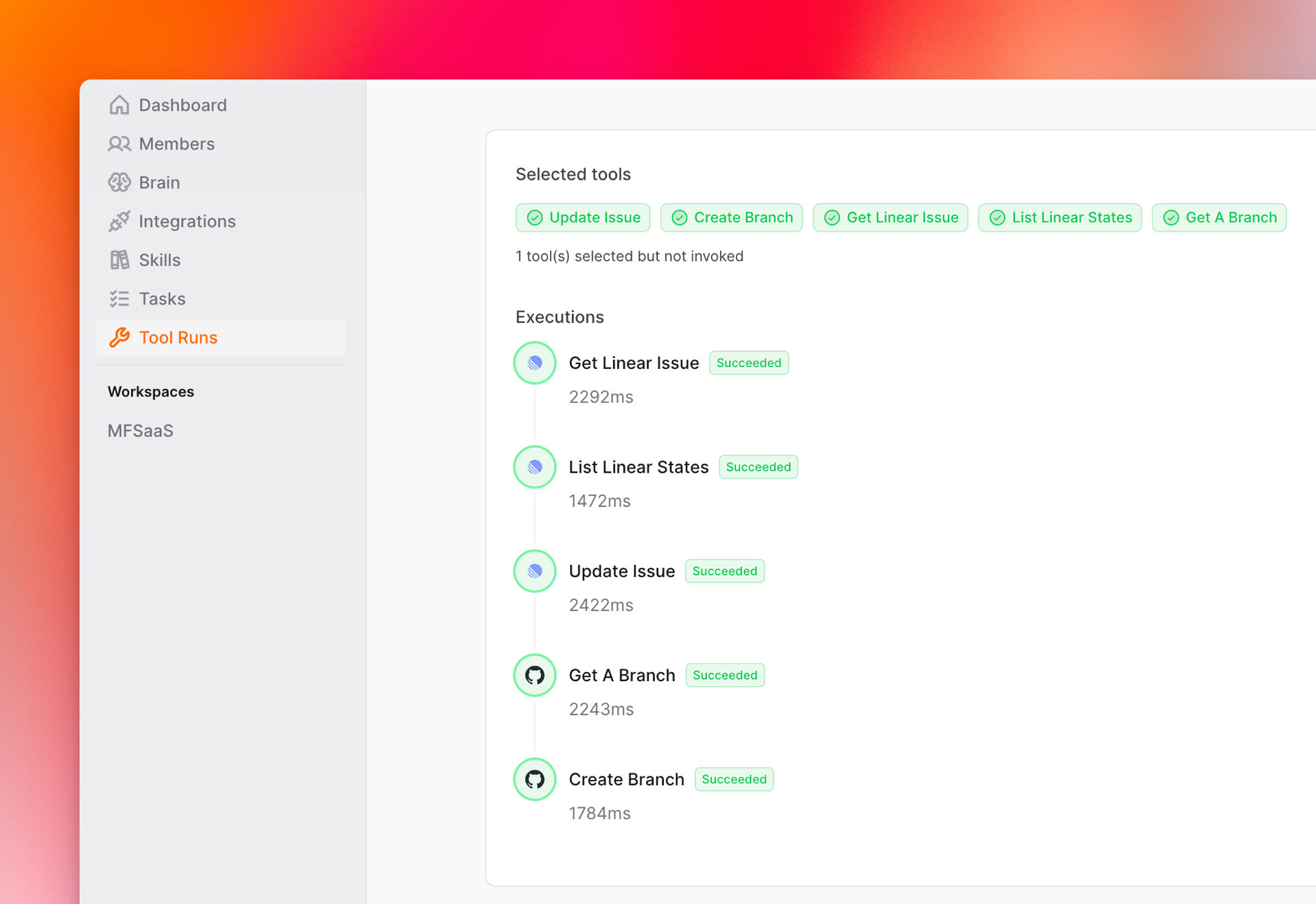
What it shouldn't do is make unilateral decisions with external consequences: sending a client message, closing a deal, or committing code without a human confirming first. Clankee builds this in structurally. Every action it takes outside of read-only lookups requires a one-click approval through native Discord buttons before anything posts, sends, or ships. Any destructive action, and anything that modifies existing data, requires explicit human approval before it executes, no exceptions. That single design choice is what separates an agent teams actually rely on from one they end up babysitting.
First, Leverage Skills Efficiently
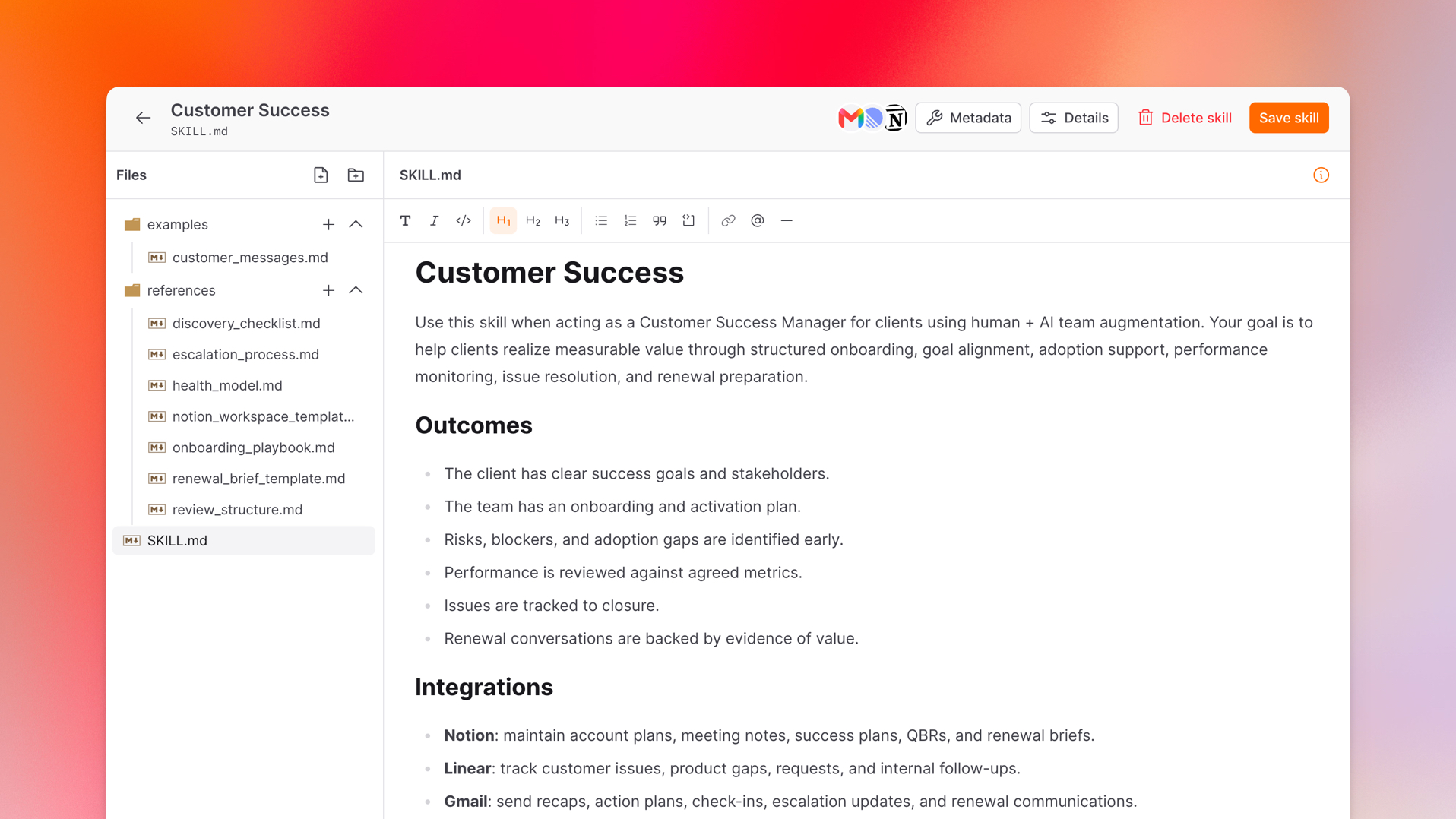
A "skill" in this context is a defined, repeatable capability: a specific task the agent knows how to execute end to end, with the right context, the right format, and the right output. Think of it as the difference between asking a generic assistant to "help with standup" every day and having a purpose-built routine that already knows your team's channels, your sprint cadence, and what a good standup summary looks like for your org.
 Skills matter because they compress a business process into something an agent can run without a human re-explaining it each time. A few practical examples:
| Skill Type | What It Replaces | Typical Time Saved |
|---|---|---|
| Standup synthesis | Manual check-ins across channels | 15-20 min/day/team |
| Release notes drafting | Engineer writing changelog by hand | 30-45 min/release |
| Client status updates | PM compiling status manually | 20-30 min/client/week |
| Sprint blocker digest | Scanning threads for stuck tickets | 10-15 min/day |
Clankee doesn't just execute pre-built skills, it can create new ones. If your team develops a workflow that works well as a one-off, Clankee can turn that pattern into a reusable skill going forward, so the next time the same type of request comes up, it doesn't need to be explained from scratch. This is different from a static bot with a fixed command list: the skill library grows as your business grows, shaped by what your team actually does rather than what a vendor guessed you'd need.
Use Relevant Integrations, With Access Controlled
An agent is only as useful as the context it can see. If it can't read your sprint board, your codebase, or your docs, it's limited to answering questions from general knowledge, which is not what a business needs from an operational assistant.
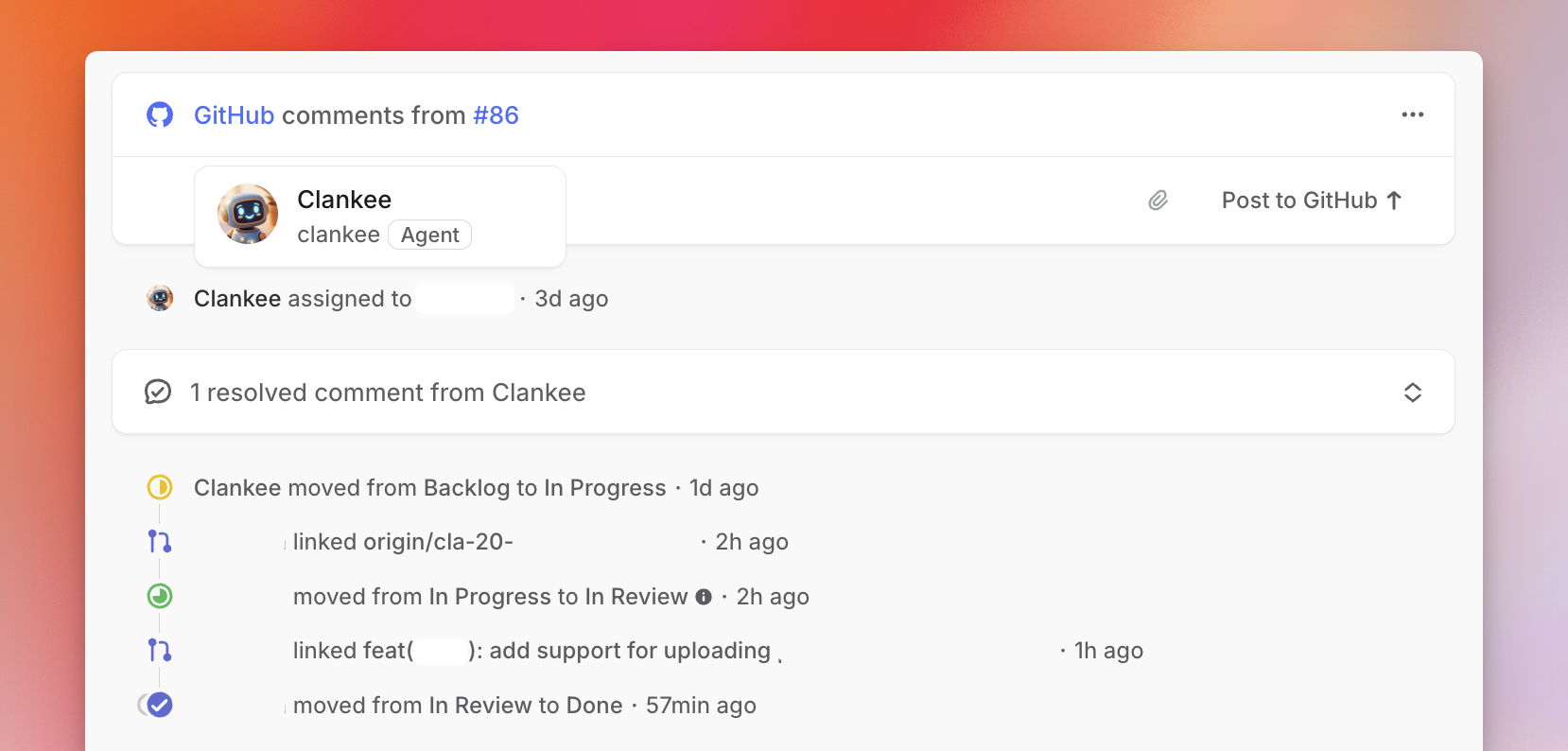
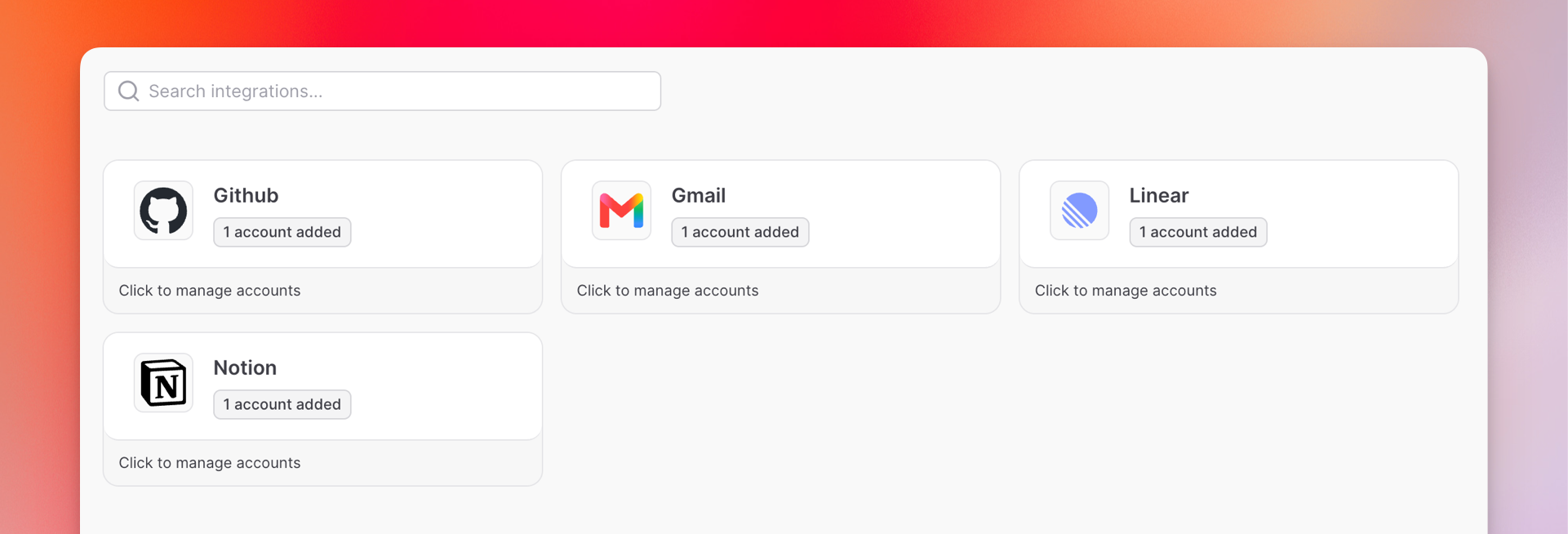
Clankee connects to the tools teams already run their work through, including Linear, GitHub, and Notion, pulling context across channels, threads, and linked integrations so it can answer with actual references instead of guesses. Connecting an integration is deliberately simple: no new dashboard to learn, no separate login to manage. The agent lives where the conversation already happens, in Discord (with Slack support on the way), and integrations get wired in through that same interface.
 Access control is the part businesses tend to underestimate until it becomes a problem. Giving an AI agent broad read-write access to your entire stack on day one is how you end up with an agent that can technically do damage. The better pattern:
- Start read-only. Let the agent index and answer from context before it can act on anything.
- Scope integrations per channel or team. A support channel doesn't need write access to your GitHub repo.
- Require approval on anything that leaves the system. Client messages, external updates, and status changes should route through a confirmation step.
- Review the action log regularly, not just when something goes wrong.
This is why the "full automation with human control" framing matters more than raw automation coverage. An agent that can technically do everything is a liability if nobody's checking what it's doing.
Have Access to Ad-Hoc Signals
Most business tools only respond when asked. A genuinely useful AI agent should also notice things on its own and say something. This is where autonomous, scheduled runs come in: the agent works on a loop independent of someone typing a prompt, then nudges the relevant person when it finds something worth their attention.
Practically, this looks like:
- An agent noticing a spike in a specific customer request across support threads and flagging it as a possible feature opportunity
- A recurring content idea surfacing from a pattern in what prospects keep asking about, prompting a nudge to marketing that a blog post or FAQ update could close the gap
- A daily automated task that prepares standup material, and if the team is already visibly aligned in the channel, quietly skips sending it rather than adding noise for its own sake
That last point is a small detail with a large implication: the value of an autonomous agent isn't measured by how often it runs, it's measured by how often what it produces is actually useful. An agent that pings a channel every day regardless of whether there's anything new to say trains people to ignore it. One that knows when to stay quiet earns the attention it asks for when it does speak up.
Auto Learn: From One-Off Task to Standing Skill
The most compounding capability an AI agent can have is noticing its own repetition. When an agent performs a task once, gets a good outcome, and later gets asked to do something similar again, that's a signal. Rather than treating each request as isolated, the agent can recognize the pattern and convert it into a standing skill, so the third and fourth time it comes up, less explanation is needed and less human oversight is required to get a reliable result.
This is functionally how new specialized roles get built inside an agent over time. A task that starts as "can you draft this client update" becomes a repeatable client success workflow. A one-time "summarize the blockers from this thread" becomes a standing sprint blocker digest. The agent's capability set grows from actual usage patterns instead of a fixed roadmap decided in advance, which means the skills that get built are the ones your business specifically needs.
How This Differs From a Generic Chatbot or a Self-Hosted Agent
It's worth being specific about what problem this actually solves, because "AI in your chat tool" now covers a wide range of very different products.
Anthropic's Claude Tag, for example, brings @Claude directly into Slack so a team can ask questions or summarize threads without leaving the conversation. That's a genuine improvement over switching to a separate chat window, but it's still fundamentally reactive: someone asks, the AI answers, the interaction ends. It doesn't hold standing context about how your specific business runs, and it isn't building a library of skills tied to your workflows. Clankee's team has written more on that distinction between an AI teammate and an AI chief of staff, and the short version is that answering questions well and coordinating operations are different problems.
The other common alternative is self-hosting an open-source agent framework, where a technical team wires up their own infrastructure, API keys, and orchestration logic. That path gives full control, but it also means owning the servers, the maintenance, and unpredictable token-based billing that can spike when a workflow retries or loops. A closer comparison against OpenClaw lays out the tradeoff in more detail, but the practical difference for most businesses is this: a managed, skill-building agent with approval gates gets you running in a day, while a self-hosted stack gets you full control at the cost of ongoing engineering overhead.
Neither alternative is wrong, they're just built for different priorities. A reactive Q&A bot suits a team that mainly wants faster answers. A self-hosted framework suits a team with the engineering bandwidth to run its own AI infrastructure. What this article is describing, skills that compound, integrations with scoped access, autonomous nudges, and approval-gated execution, is a third category built specifically for teams that want operational leverage without taking on either of those tradeoffs.
What This Looks Like Inside a Real Company
At Otimbi Labs, the parent company behind Clankee, this isn't a hypothetical. The business runs largely inside Discord with its own customers, and Clankee handles a meaningful share of the coordination work that would otherwise fall on a person. One concrete example: an agent prepares daily standup material for the team automatically. Some days, the team is already visibly aligned on priorities in the channel, and the standup gets skipped entirely rather than run as a formality.
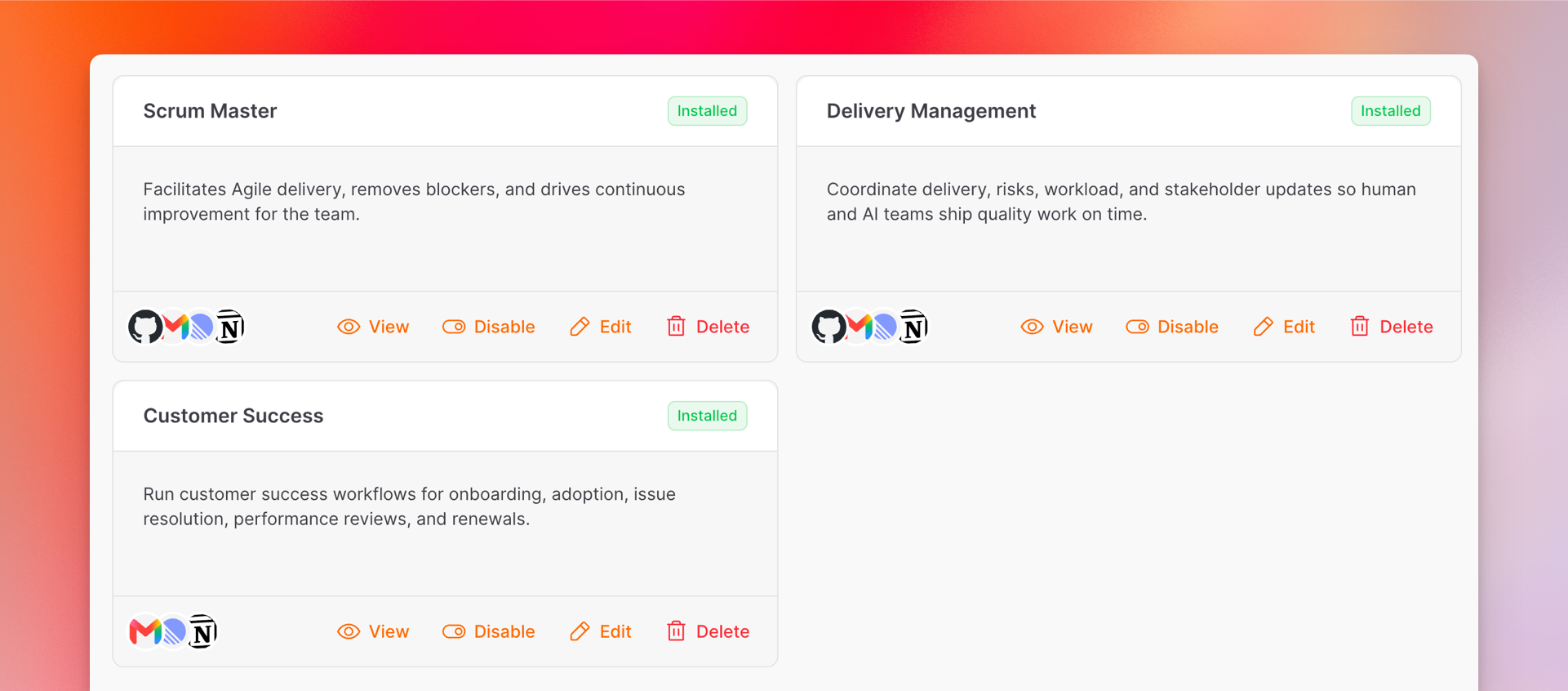
Beyond internal coordination, Otimbi Labs' core business is helping companies offload development and operational work to AI-augmented teams, consulting on where automation makes sense and where it doesn't. Within that structure, Clankee has effectively taken on roles like scrum master, delivery manager, and client success manager, each implemented as a distinct skill set that shapes how it interacts depending on which channel and which customer it's talking to. A support channel gets a different interaction pattern than a delivery status channel, because the skill built for each context is built around what that context actually requires.
Making the Shift Without Losing Control
The businesses that get the most out of AI agents aren't the ones that hand over the most control fastest. They're the ones that build up skills deliberately, scope integrations with access control in mind, let autonomous signals surface real opportunities instead of noise, and let the agent's capability set grow from what actually gets repeated. Start with one well-defined skill, connect one integration with tight scope, and let the approval step stay in place until the pattern proves itself. That's the sequence that turns an AI agent from a novelty into infrastructure your team actually depends on.